

Today, we're exploring the Cessna 501 Citation I/SP, a groundbreaking light business jet that helped democratize private air travel. Introduced in the late 1970s, this aircraft was part of Cessna's ambitious foray into the jet market, offering efficiency, simplicity, and single-pilot capability at a time when business jets were often seen as luxuries for the ultra-wealthy. Whether you're an aviation enthusiast, a pilot, or just curious about how this jet shaped the industry, buckle up as we cover its development, design, performance, operators, incidents, and legacy in as much detail as possible.

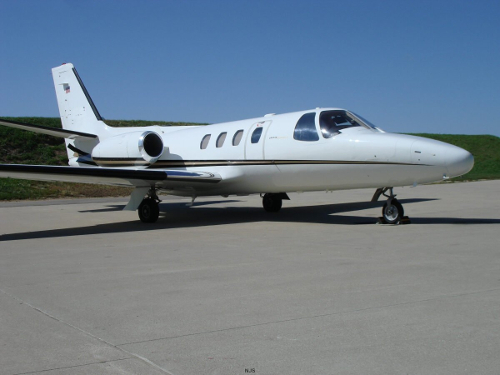
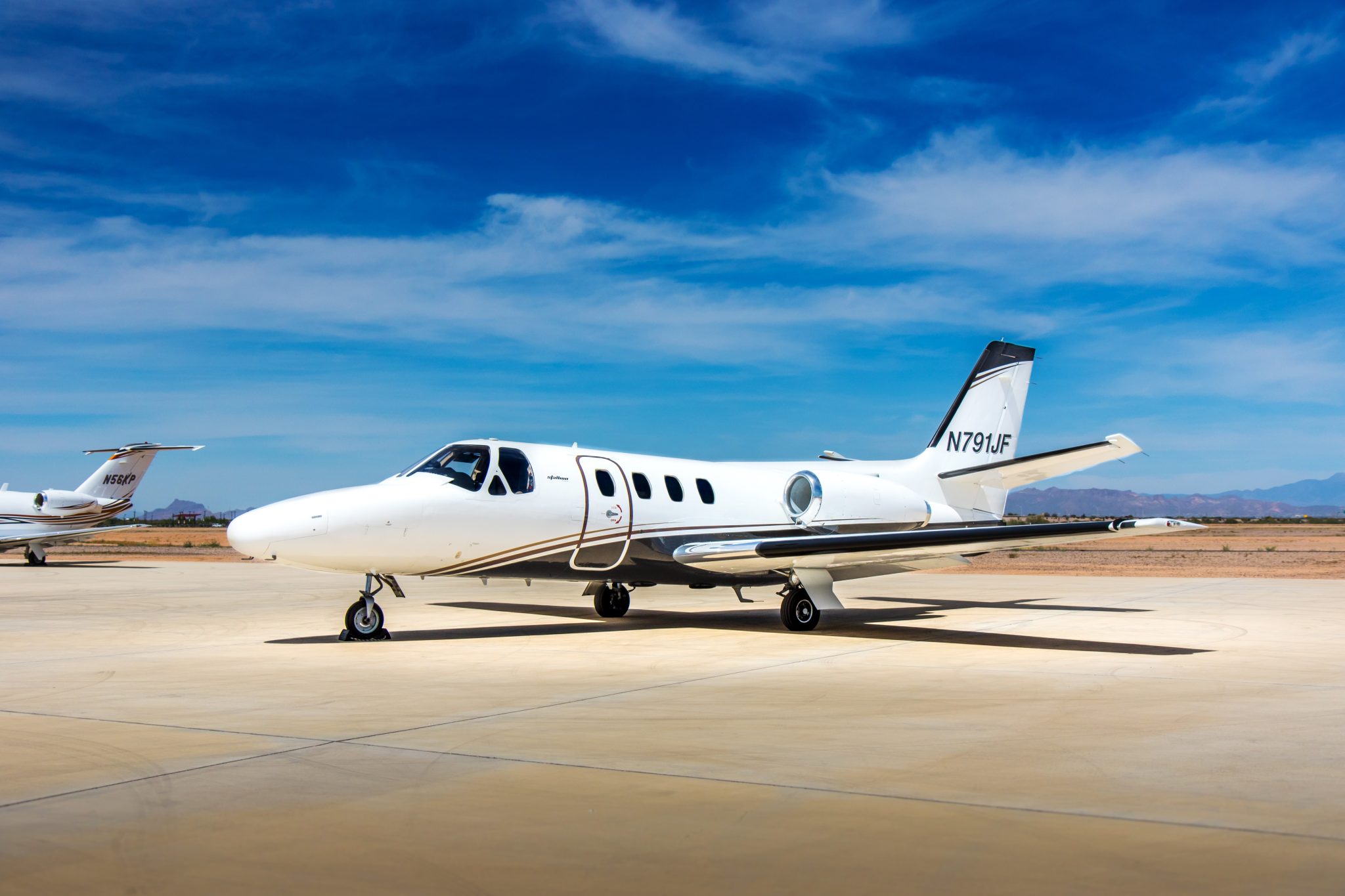
Exterior views of the Cessna 501 Citation I/SP, showcasing its sleek, straight-wing design optimized for short-field performance.
Development History: From Fanjet 500 to Citation Icon
The story of the Cessna 501 begins in the late 1960s, a era when business aviation was booming but dominated by larger, more complex jets like the Learjet 23. Cessna, already a leader in piston and turboprop aircraft, saw an opportunity for a simpler, more affordable entry-level jet. In October 1968, the company announced the Fanjet 500, a twin-turbofan light jet designed to be economical and easy to operate. The prototype took to the skies on September 15, 1969, powered by Pratt & Whitney Canada JT15D-1 engines.
Certification hurdles delayed progress; the FAA required changes to meet Part 25 standards for transport-category aircraft. By September 9, 1971, the renamed Citation (Model 500) received its type certificate. Early models faced criticism for underwhelming performance, leading to upgrades like more powerful JT15D-1A engines, increased wingspan, and thrust reversers by 1976.
The 501 variant, dubbed Citation I/SP (Single Pilot), was Cessna's response to demands for reduced operating costs. Certified in 1977, it allowed operations with just one pilot, a first for business jets in its class. Production ran from 1977 to 1985, with a total of 689 Citations built across the 500/501 family (312 Model 500s and 377 Model 501s). Development costs were staggering—estimated at 35% to 50% of Cessna's net worth at the time—but it paid off, establishing the Citation line as the world's best-selling business jet family.
Design and Specifications: Simplicity Meets Performance
The Citation I/SP was engineered for reliability and low maintenance, featuring a straight-wing, low-wing configuration with a T-tail for stability. Its fuselage was pressurized to 8.3 psi, allowing a cabin altitude of 8,000 feet at 41,000 feet service ceiling.
Key Dimensions and Weights
Length: 43 feet 6 inches (13.26 m)
Wingspan: 47 feet 1 inch (14.35 m)
Height: 13 feet 11 inches (4.24 m)
Empty Weight: 6,611–7,000 lbs (2,998–3,175 kg), depending on configuration
Maximum Takeoff Weight (MTOW): 11,850–12,000 lbs (5,375–5,443 kg)
Fuel Capacity: 564 US gallons (2,135 L), usable 3,645 lbs (1,653 kg)
Powerplant and Performance
Powered by two Pratt & Whitney Canada JT15D-1A or -1B turbofans, each producing 2,200–2,500 lbs of thrust, the 501 offered impressive short-field capabilities.
Maximum Speed: 357 knots (661 km/h) at high-speed cruise
Long-Range Cruise Speed: 330–350 knots (611–648 km/h)
Range: 1,200–1,328 nautical miles (2,222–2,459 km) with NBAA IFR reserves; up to 1,000 nm with full payload
Service Ceiling: 41,000 feet (12,497 m)
Rate of Climb: 2,719 feet per minute (13.8 m/s)
Takeoff Distance: 3,500 feet (1,067 m) balanced field length
Landing Distance: 2,230 feet (679 m) over a 50-foot obstacle
These specs made it ideal for regional hops, like New York to Chicago or London to Paris, with fuel efficiency that kept costs down—burning about 600–700 lbs per hour in cruise.

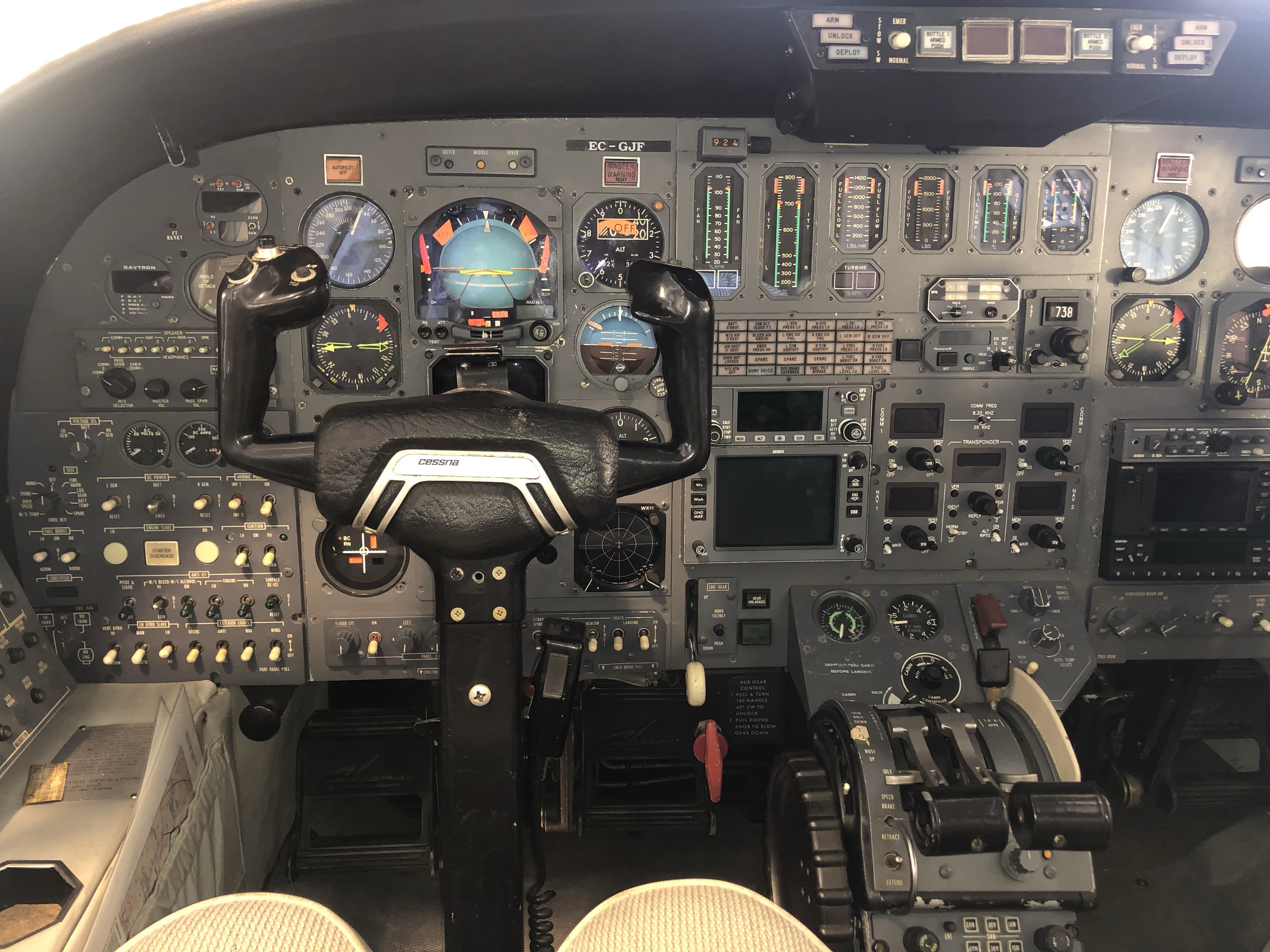
Cockpit and interior glimpses of the Citation I/SP, highlighting its compact yet functional layout for single-pilot operations.
Cabin and Avionics
The cabin measured 11.3–12.7 feet long, 4.7–4.9 feet wide, and 4.3–4.8 feet high, seating 6–7 passengers in a typical executive setup (club seating with single seats and an optional aft divan). Baggage space totaled 57 cubic feet (internal and nose compartments). Amenities included a small galley and enclosed lavatory.
Avionics evolved over time; early models had basic analog instruments, but many were retrofitted with Garmin GNS 430/530 GPS, Collins Pro Line, or even modern glass cockpits like the Garmin G1000. Its single-pilot certification required enhanced autopilot and simplified systems.
Variants and Upgrades
The primary variants were:
Model 500 Citation: Original two-pilot version (1971–1976).
Model 501 Citation I/SP: Single-pilot certified, with minor structural reinforcements and system redundancies (1977–1985).
Post-production upgrades included the Eagle mod (improved engines for better hot/high performance) and winglets for extended range. Some were converted to cargo configurations or used for special missions like aerial surveying.
Operational History: From Corporate Fleets to Global Reach
The Citation I/SP found homes with corporate operators, charter companies, and even governments. Notable users included the U.S. Customs Service for border patrols and various air ambulance services due to its short-field prowess. By the 1980s, it was a staple in flight departments worldwide, from the U.S. to Europe and Africa.
As of 2025, hundreds remain in service, often as entry-level jets for owner-pilots or training aircraft. Recent X posts highlight off-market sales, like a 1978 model in 2024, underscoring its enduring market. Operating costs are low—around $1,200–$1,500 per hour—including fuel, maintenance, and insurance.
Current Status and Legacy: Still Soaring in 2025
As of December 2025, the FAA registry shows around 400 active Citation Is, with many upgraded for NextGen airspace compliance. Values range from $300,000–$800,000 for well-maintained examples. Its legacy? Paving the way for the Citation family, now boasting over 8,000 deliveries. The 501 proved that jets could be accessible, influencing designs like the Phenom 100 and HondaJet.
In conclusion, the Cessna 501 Citation I/SP isn't just an aircraft—it's a milestone in aviation democratization. If you're considering one for your fleet or just admiring from afar, its blend of history, performance, and affordability remains unmatched. What are your thoughts on classic jets like this? Drop a comment below!
0 comments